Dual-character mechanics
Designed mirrored control, six core rules and combinations that give each character a different role in the puzzle.
Explore details ↓2D narrative puzzle-platformer
One player. Two characters. A shared escape.
THE PROJECT
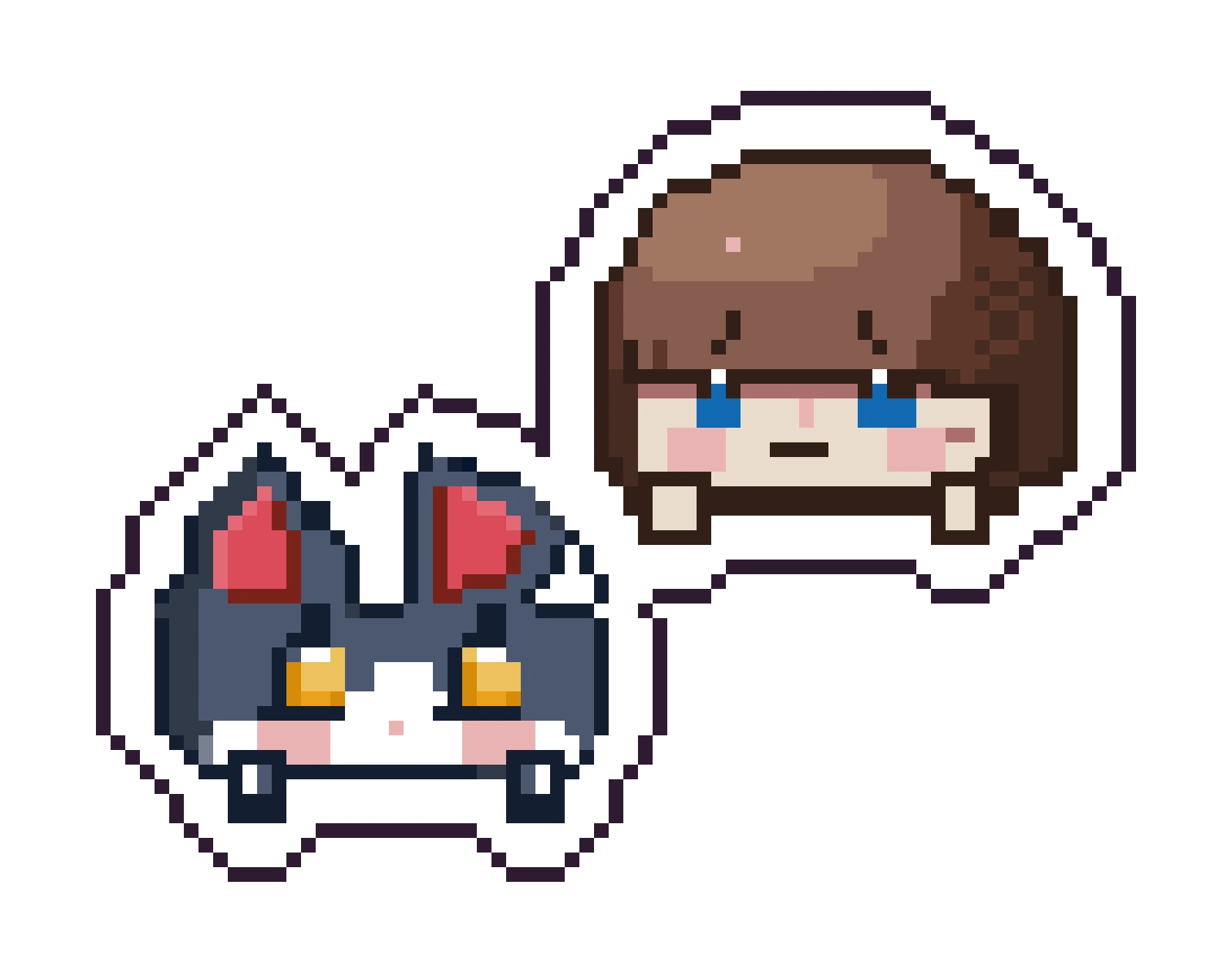
Dawn Awaits turns the coordination of a cooperative game into a single-player puzzle. One input moves a girl and her inner self, Domino, along separate routes, making every action a decision about both characters.
DESIGN & IMPLEMENTATION
Designed mirrored control, six core rules and combinations that give each character a different role in the puzzle.
Explore details ↓Designed asymmetric routes and a four-stage progression from safe discovery to combined application.
Explore details ↓Connected rooms and diary fragments to the girl’s story, and implemented movement mapping and animation states.
Explore details ↓01 / DUAL CONTROL
The girl and Domino move in opposite directions from the same input. A safe move for one can put the other at risk, so players must watch both routes and find an action that helps them progress together.
02 / MECHANICS
Size changes weight and mobility; dash opens a brief route through hazards. Gravity and rotating platforms change spatial relationships, the direction switch changes how movement is shared, and a clone adds a third character to coordinate.
03 / COMBINATIONS
Combining gravity and direction changes how an input moves each character. Dash and fire require a safe moment between bursts. Shrink, dash and moving saws bring passage size, speed and timing into the same decision.
04 / LEVEL EXAMPLE
The level first exposes the link between a switch and a saw. Growing lets the girl move a toy box onto another switch; the box holds a safe route open while Domino reaches a shrink pickup and passes through the lower gap.
05 / TEACHING STRUCTURE
I used Kishōtenketsu to structure the learning sequence: safe size experiments, focused practice around obstacles, a twist using gravity and direction, and a final sequence that combines familiar actions. The examples below illustrate the role of each stage.
06 / ENVIRONMENTS
An isolated bedroom, an uneasy bathroom and traces of conflict communicate the girl’s experience through the rooms themselves. The community street gives that enclosed journey a visible destination beyond the home.
07 / DIARY DESIGN
Diary fragments frame domestic violence through the girl’s own language: a fight becomes a hurricane, while photographs, scattered petals and handwritten marks connect her observations to the damaged home. The diary adds her perspective to the environmental story.
08 / IMPLEMENTATION
Domino reads the main character’s horizontal input and jump state. The moveReversed flag chooses matching or mirrored movement, while walking and facing states update the animation. The Animator capture shows the resulting character-state connections.